Nobody grows up knowing how to hire a bathroom contractor. You get one shot at it every fifteen years, you have three quotes on the kitchen table that are thousands apart, and no way to tell whether the cheap one is a bargain or a warning.
This is the guide I’d want if I were on your side of the table. It’s about how to tell companies apart before you sign, written by one of them — so read it with that in mind, and check everything I say against the other two quotes you’re holding.
Check the license before anything else
In Maryland, anyone doing home improvement work over $500 must hold a licence from the Maryland Home Improvement Commission. Not a business licence. Not a tax ID. An MHIC number.
You can verify one in about thirty seconds at the Maryland DLLR licence search. Type the company name or the number. You’ll see whether it’s active, when it expires, and whether there are complaints attached.
Do this first, because it costs you nothing and it eliminates a surprising number of people. An unlicensed contractor also means no access to the Maryland Home Improvement Guaranty Fund, which is the thing that reimburses homeowners when work goes wrong. That fund is the difference between a bad outcome and an unrecoverable one.
DayBrook’s number is MHIC #116052. Look it up. So should you for whoever else is quoting.
Ask for a number before anyone visits your house
Here’s the test that sorts this industry faster than anything else: ask what a tub-to-shower conversion starts at, over the phone, before scheduling anything.
A lot of companies won’t tell you. The script is that every bathroom is different and they need to see it. There’s truth in that — but it isn’t the reason. The reason is that the price is set in your kitchen, after a presentation, with a discount that expires when the salesperson leaves.
Any company that does this work regularly knows what their entry-level job costs. If they won’t give you a starting figure, you’re not being quoted. You’re being qualified.
For reference, a professionally installed conversion generally runs between about $10,000 and $20,000 in this market. DayBrook starts at $9,999 as of September 2026, and most land around $13,500 depending on size, what’s behind the old surround, and the system you choose.
Ask what happens if they find rot
This is the question that reveals the most, and almost nobody asks it.

A tub that’s been leaking quietly for years can rot studs, the subfloor, or both. Nobody can see that through tile. So ask directly: if you open the wall and find damage, what happens to my price, and who decides?
You’re listening for a process. Do they stop and show you? Is there a documented rate for structural repair? Do you get a revised written price before work continues, or does it appear on the final invoice?
Vagueness here is the single most reliable predictor of a bad experience. “We’ll take care of you” is not an answer.
“One day” deserves a follow-up question
One-day installation is real. It works because the system is manufactured to your measurements before install day, so nothing is being figured out in your bathroom while a crew stands around.
But ask what happens when it isn’t one day. Structural damage, a relocated drain, an unusual layout — any of those extend it. A company that says every job is one day, no exceptions, is either not doing many of them or not telling you the whole thing.
DayBrook completes a standard conversion in as little as one day. Jobs with rot or a moved drain take longer, and you’ll know which yours is at the inspection rather than on install morning.
Understand which warranty you’re being offered
There are two, they cover different things, and they’re often blurred together in a sales presentation.
- Manufacturer warranty — covers the acrylic or solid-surface system itself. Often lifetime. Comes from the factory, not the installer.
- Workmanship warranty — covers the installation. If a seam fails or the pan leaks because of how it was fitted, this is the one that matters.
A lifetime manufacturer warranty is close to meaningless if the installation warranty is ninety days, because installation is where things actually go wrong. Ask for both in writing, with durations.
DayBrook carries a 5-year workmanship warranty alongside the manufacturer warranty on the system.
Ask who is doing the work — and get a real answer
You’re entitled to know who will be in your house. Ask how many people, how long they’ve done this specific installation, and who to call if something goes wrong at 4pm on a Friday.
What you want is a straight answer rather than a slogan. Plenty of good companies use subcontracted labour and plenty of bad ones claim they don’t. The claim isn’t the signal — the willingness to answer plainly is.
The cheapest quote is usually the most expensive one
When one number comes in dramatically under the others, it’s almost always one of three things:

- A tub liner, not a replacement. An acrylic shell fitted over the existing tub. Cheaper, faster, and it does nothing about what’s behind the wall.
- A promotional price for one stock configuration that doesn’t match your bathroom.
- A figure that excludes labour, or excludes the plumbing, or excludes disposal.
Ask which. A good company will tell you exactly what their number includes, and a great one will tell you what it excludes without being asked.
Red flags in the sales process
The pattern in this industry is well established, and once you can see it you can’t unsee it:
- A price that drops if you sign tonight. A real price doesn’t expire at 9pm.
- A presentation before a measurement. If the first hour is a slideshow, you’re in a sales appointment.
- Refusal to leave the quote behind. You should be able to read it, sleep on it, and compare it.
- Large deposits. Maryland law caps what a contractor can require up front. Be cautious about anything approaching a third before materials are ordered.
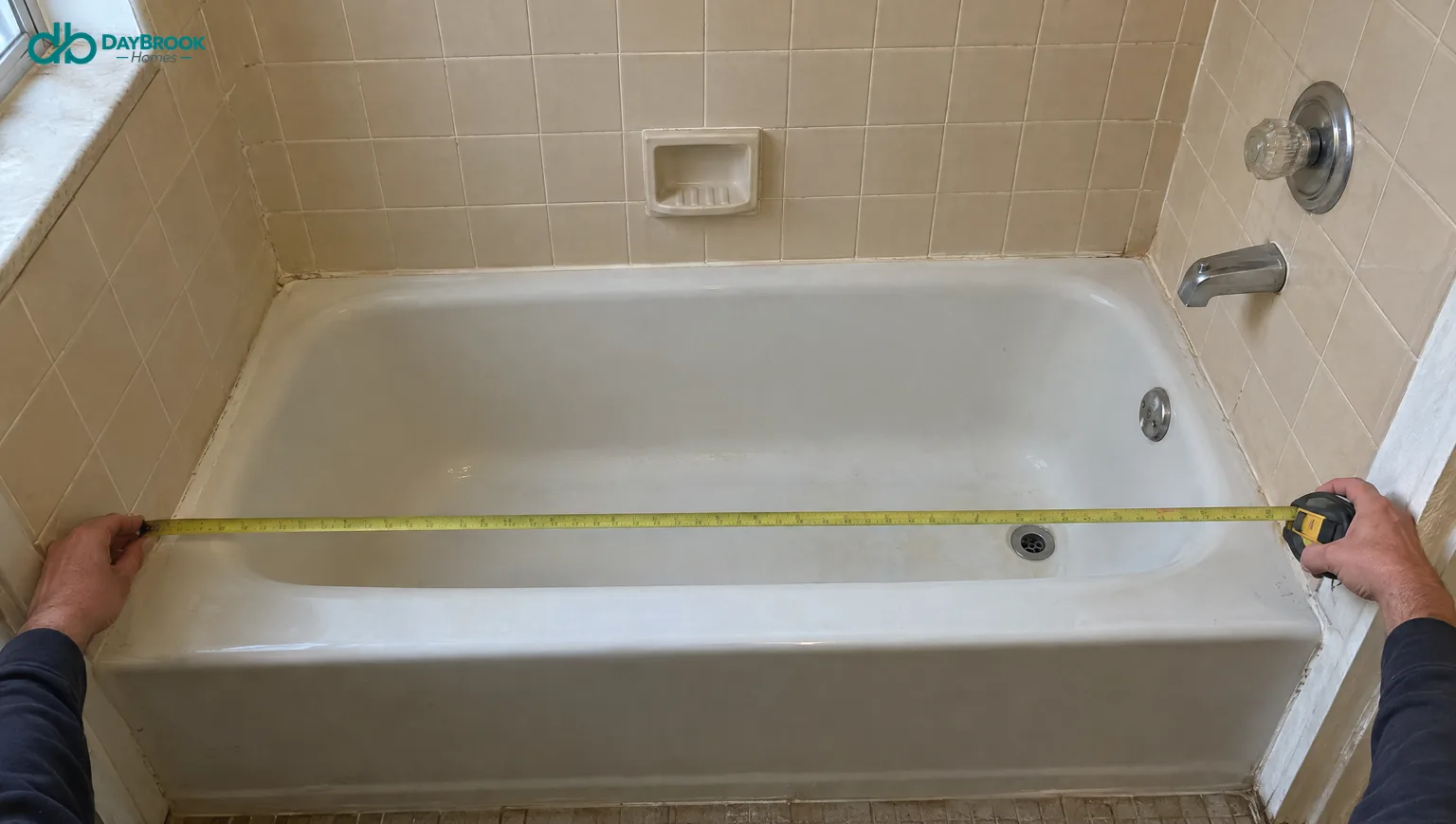
- No written scope. “New shower” is not a scope. Model, dimensions, drain configuration, and what happens to the old tub all belong in writing.
What a real quote actually contains
Before you compare three numbers, check they describe the same job. A complete quote should name:
- Removal and disposal of the existing tub and surround
- The specific wall system — brand, material, finish
- Base size and drain location, and whether the drain is moving
- Threshold height, and whether it’s low-threshold or curbless
- Glass: fixed panel or door, framed or frameless
- Valve trim and showerhead, by model
- Who pulls permits, if any are required
- Both warranties, with durations
- Payment schedule and what triggers each payment
Two quotes that look thousands apart are frequently quoting different jobs. This list is how you find out.
Get three quotes, and use the third one properly
Three is the right number. One gives you no reference. Two gives you a coin flip.
The mistake is using the third quote only to negotiate price. Use it to find the questions you didn’t know to ask. If one company raises the drain location and the others don’t, that’s information about the job — and about the other two companies.
Check reviews for the pattern, not the score
Every established company has a five-star average. It tells you almost nothing.
Read the three-star reviews instead. That’s where you find how a company behaves when something goes wrong, which is the only thing you’re really buying. Look for whether problems got fixed, how fast, and whether the owner responded like a person.
Look for detail, too. Reviews that name the specific job — a 1950s tub, a leak found behind a wall, a crew that cleaned up — come from real projects. DayBrook holds 4.8 stars across 48 Google reviews after more than ten years in Maryland.
Hire local, and understand why it matters
National brands run this category hard, and the install is frequently handled by a regional dealer regardless of whose name is on the van. That isn’t automatically bad — but it does change who you call in year three.

A local company is reachable. The owner’s name is on the reviews. If a seam fails eighteen months from now, you’re calling someone who works twenty minutes away rather than a national service queue.
Ask where the company is based, how long it has worked in your county, and who you’d speak to about a warranty claim.
The questions worth asking, in order
- What’s your MHIC number?
- What does a conversion like mine start at?
- What happens if you find rot behind the wall — and who decides?
- How long is the workmanship warranty, separate from the manufacturer’s?
- Is the drain moving, and what does that change?
- Who will be in my house, and who do I call if something goes wrong?
- Can I keep the written quote?
Any company worth hiring will answer all seven without hesitating.
How we do it
DayBrook Homes has remodeled bathrooms in the Baltimore area for over a decade, licensed in Maryland as MHIC #116052.
Our version of the first appointment is a free in-person consultation: moisture readings in the surrounding walls and subfloor, the condition of the pan and drain, and a written price before you commit to anything. No presentation, no discount that expires, and you keep the quote whether or not you hire us. If your tub has years left in it, we’ll tell you that.
Financing is available with no money down for qualified buyers, and pre-approval doesn’t require a hard credit check.
Financing provided by Momnt. Subject to credit approval; not all applicants qualify. Rates range from 9.99% to 17.99% APR and are set by creditworthiness. Equal Housing Lender.
Frequently asked questions
How do I check whether a contractor is MHIC licensed?
Search the company name or licence number on the Maryland Department of Labor’s licensing site. You’ll see whether the licence is active, its expiry, and any complaints on record. It takes under a minute and it’s the single highest-value check you can run. An unlicensed contractor also puts the Home Improvement Guaranty Fund out of reach if something goes wrong.
Do I need a permit for a tub-to-shower conversion in Maryland?
It depends on your jurisdiction and on the scope. A like-for-like replacement that doesn’t move plumbing or alter structure is generally treated differently from one that relocates a drain or changes framing. A licensed contractor handles permitting as part of the job — and if a company tells you no permit is ever needed for any conversion, ask them to put that in writing.
How many quotes should I get?
Three. Fewer gives you no reference point. More tends to produce paralysis rather than clarity. The value isn’t only in comparing prices — it’s that each company raises considerations the others didn’t, which tells you something about all three.
What’s the difference between a tub liner and a conversion?
A liner is an acrylic shell fitted over your existing tub. A conversion removes the tub entirely and replaces it with a shower. Liners are cheaper and faster, but they cover the old unit rather than replacing it — so if there’s water damage behind the wall, a liner seals it in. That’s usually the explanation for a quote that comes in dramatically below the others.
How long does a tub-to-shower conversion actually take?
A standard conversion in the existing footprint can be completed in as little as one day, because the system is built to your measurements beforehand. What extends it is almost always something found behind the old surround: rotted framing, a failed pan that’s been leaking into the subfloor, or a drain that has to move.
Should I be worried about a large deposit request?
Maryland limits what a home improvement contractor can require up front. A modest deposit to order materials is normal. A demand for a third or more of the project value before anything is ordered is worth questioning, and worth comparing against what the other two companies ask for.
Book a free consultation
If you’re gathering quotes, get ours as one of the three. You’ll get moisture readings, the real condition of your pan and framing, and a written price — whether or not you hire us.
Book a free in-person consultation, or call (443) 278-0301 and ask for David.
Pricing and financing terms shown are current as of September 2026 and are subject to change. For a price specific to your bathroom, book a free consultation.