
The most effective small bathroom tile design ideas can greatly enhance the functionality and aesthetic of a small bathroom. The selection of tiles plays an important role in managing moisture, light reflection, and space illusion, while also reflecting your personal taste. Variables like tile material, size, shape, grout color, tile finish, and tile pattern all combine to achieve the final effect. Large tiles can make a small bathroom appear more spacious, while smaller tiles create a mosaic effect. A neutral color palette is always a good option that complements well with bold wallpaper or dramatic fixtures, while colorful, patterned, or textured tiles can add a lot of energy and modernity to your bathroom. By considering different tile designs and patterns for small bathrooms, you can easily identify a design strategy that meets your requirements of beauty, functionality, and space efficiency. In this blog, you will discover 22 small bathroom floor tile ideas that increase your space and capacity.
1. Select or Integrate Classic Penny Tile

Penny tile is a classic and timeless option that will work well in any bathroom but is especially great in a small bathroom because the tile is small in scale and can be cut to fit even the smallest of spaces. DayBrook Homes chose penny tile flooring that complements the white subway tiles in the shower and creates a timeless look. The dense grout pattern also adds extra traction, which makes it a great option for a bathroom. You can change the color of the grout to go from vintage to modern.
2. Match Walls and Floors

Penny tiles can also be used in a modern-style bathroom. Michelle Berwick Design decided to use black grout to give the white penny tiles a modern look. The use of the same tile on different surfaces creates a seamless flow that makes the room appear larger. This also makes it easy to choose the materials.
3. Install No-Fail Subway Tiles

Subway tiles are always a safe bet when it comes to tile choices. In this compact bathroom from Space Factory, floor-to-ceiling white subway tiles with matching grout work to direct the eye up and make the space feel larger and brighter. In the shower, a patterned tile in white, black, and gray adds visual interest without overwhelming the compact space. Subway tiles are easy to find and replace, making them a no-fail choice. Patterns such as vertical or herringbone can give the classic look a new twist.
4. Mini Backsplash Installation

Add some personality to a small bathroom with fish scale tiles. Neva Interior Design combined a mini backsplash of blush pink tiles to create a scalloped edge with a brass mirror to add some flair to this small Parisian bathroom. A mini backsplash installation can make a statement without overwhelming small wall space. It’s also a budget-friendly solution to add color or interest.
5. Add Horizontal Stripes
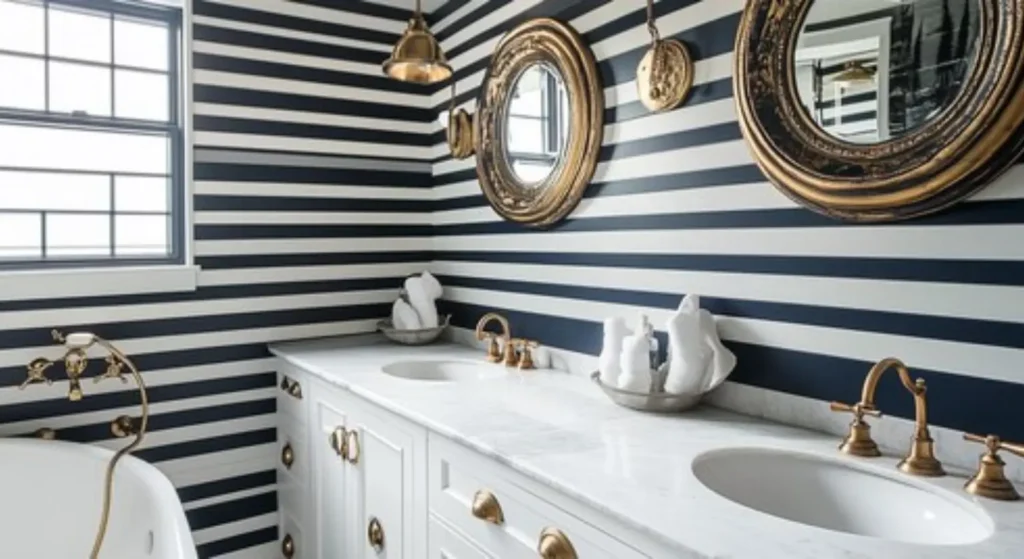
Horizontal stripes give the illusion of width, making them ideal for a small bathroom. In this guest bathroom by K Shan Design, the walls are painted with thick horizontal stripes of black and white subway tiles, giving the room a dramatic look without spending a fortune. To achieve this look, limit the colors to a few. Use the same colors in accessories to complete the look.
6. Install Large Tiles

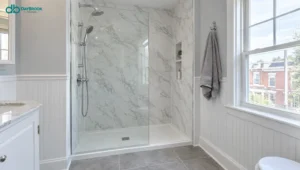
Large tiles are surprisingly effective in a small room, creating the illusion of a single piece of stone at a fraction of the cost. In this small bathroom, white and gray marble-effect tiles with light grout create a seamless finish that blends in with the white walls and stainless steel units to create a bright and airy feel in this small bathroom designed by Fantastic Frank. There are fewer grout lines to detract from the space. They are also easier to clean.
7. Install Terazzo Tile
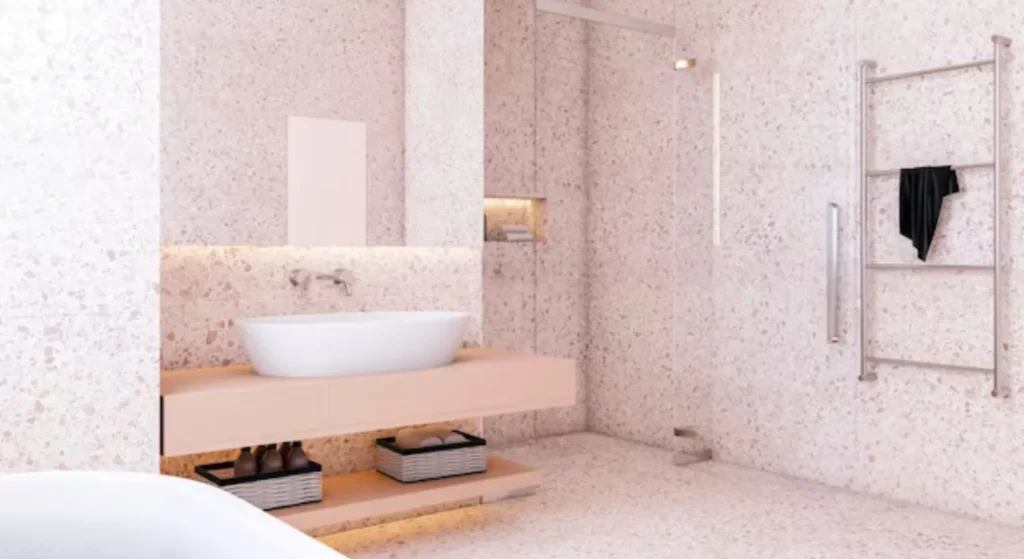
Terrazzo tile in soft colors brings a subtle element of interest and texture to the backsplash in this bathroom designed by Cathie Hong Interiors, eliminating grout lines that can make a space feel smaller, and complementing the midcentury modern character and Japandi aesthetic of the bathroom. Terrazzo tile conceals dirt and water marks well due to its mottled appearance. Use smaller pieces for a soothing effect in small spaces.
8. Add Geometric Shapes

In this small bathroom designed by Becca Interiors, the use of black hexagonal tiles and bright white grout creates a geometric shape design that not only adds to the brightness of the white walls but also creates a focal point in the small bathroom, along with the industrial wall sink and planters. Geometric tiles can create a focal point even in neutral colors.
9. Stagger a Vertical Layout
In this small bathroom, the use of pale blue vertical subway tiles in a slightly staggered fashion provides a pop of color without overwhelming the space, as the eyes are directed upwards to create the illusion of higher ceilings. The use of the same tiles on the front of the bathtub increases this effect. Vertical lines create the illusion of height and openness. This design is best achieved with light colors.

10. Accent With Color

While keeping the same subtle tile throughout a small bathroom can make the space seem larger, sometimes going the complete opposite can also be effective. In this small historical Maine bathroom by Tyler Karu Design and Interiors, patterned tile that picks up on the blue and white theme of the bathroom adds a great touch of style and flair to both the floor and a wall niche, showing that a small space is a great place to make a statement and pull it off with flair. Keep bold tile patterns to one or two areas. Pick up colors in towels or accessories.
11. Install a Herringbone Tile Pattern

A simple white tile installed in a herringbone pattern brings texture to this small bathroom designed by Emily Henderson Design without competing with the shiplap half walls and blue and white patterned wallpaper. Herringbone patterns create visual interest and movement. They also camouflage minute floor imperfections.
12. Go Retro with Square Tiles
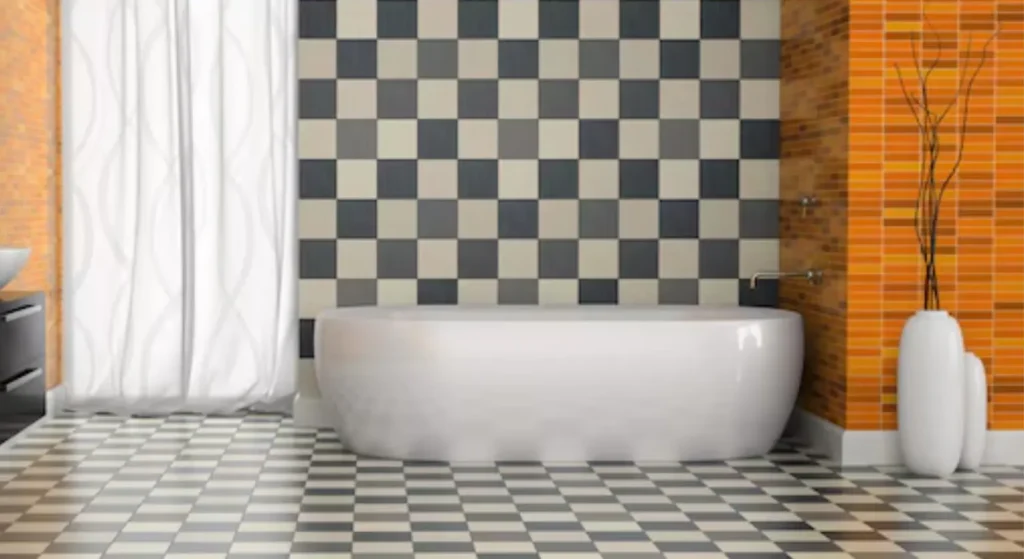
Add some retro flair to your modern bathroom with colorful square tiles. Neva Interior Design used colorful square tiles to tile the niche above the sink in this colorful bathroom. The tiles are in a refreshing shade of pink. The designer also used terrazzo floor tiles to add some retro flair to the bathroom. Square tiles are easy to install
13. Use Tile Wainscoting
This is a small bathroom designed by Malcolm Simmons for Emily Henderson Design. The shiny white subway tile wainscoting on the lower half of the wall creates a seamless look by reflecting light and blending with the matte white walls. If you want to add more shine, you can opt for a high-gloss finish. Tile wainscoting protects areas that are prone to splash. It also gives you the opportunity to paint or wallpaper above.
14. Use Neutral Patterns

A patterned tile floor in light grays and whites creates detail and interest that draws the eye around the room, making this small space by Desiree Burns Interiors appear larger than it is. Low contrast patterns are full of energy without being too busy. They are perfect when you want to add interest without using a lot of color.
15. Use Contrasting Grout

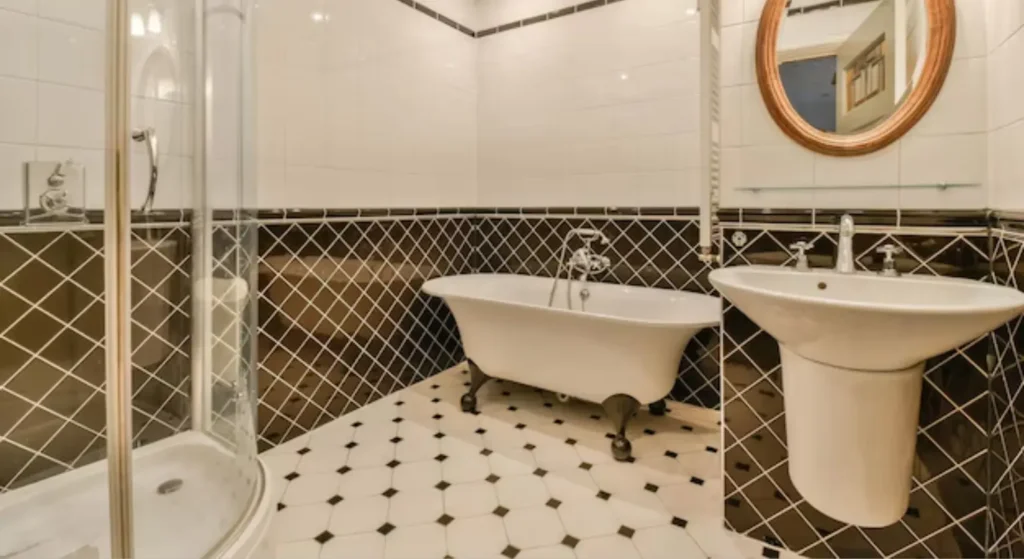
The best way to incorporate black and white tiles, paint, fixtures, decor, and accessories is in the small bathroom designed by Emily Bowser for Emily Henderson Design. The use of black hexagonal tiles on the floor with thin white grout creates a geometric pattern. The contrasting grout is used to accentuate the shape and arrangement of the tiles. It can be used to create a design element out of tiles.
16. Modernize With Bold Color
In this small modern bathroom, a raised painted ceiling and white walls provide a clean box that makes the space feel larger. A graphic patterned blue tile floor provides a focal point that injects bold style and color that adds a big dose of personality to the small space. Bold floors anchor minimal walls. Other finishes should be kept simple to let the tile be the star.
17. Add a Tall Tile Backsplash
Extends a tile backsplash all the way up to the ceiling to maximize vertical space. In this powder room, designer Louis Duncan-He Designs chose to create a subtle backsplash using stacked off-white subway tiles and matching grout that stays out of the spotlight, letting the texture and color of the walls and fabulous light fixture steal the show. Full-height tile backsplashes provide better protection against moisture. They also provide a very sleek look.
18. Use Textured Wall Tiles
In the small powder room, Louis Duncan-He Designs chose off-white large-format tiles with a subtle textured herringbone design as a floor-to-ceiling backsplash behind the sink to let the adjacent wallpaper wall be the focal point. Pale grout reduces contrast and makes grout lines almost invisible. Texture creates depth without relying on strong color. It is effective in monochromatic designs.
19. Use Faux Marble Floor Tiles

The classic faux marble floor tiles are a subtle addition to this guest half bath designed by Ursula Carmona of Home Made By Carmona. The half bath is decorated with wainscoting, patterned wallpaper, colored glass, brass, and artwork. Faux marble porcelain tiles are more durable and economical than real marble. They also need less maintenance.
20. Create Flow
Michelle Berwick Design achieved flow in a small bathroom by carrying light blue patterned tile from the shower pan to the floor, creating the illusion of a larger space that is furthered by the absence of a shower curtain or door. The use of continuous tile surfaces creates the illusion of a larger space. Curbless showers add to this effect.
21. Blend Matte and Gloss Finishes
Mixing matte and gloss finishes in the same color scheme creates a subtle contrast and interest without making a small bathroom look cluttered. Glossy tiles can be used on shower walls or in a backsplash to create the illusion of reflection, while matte tiles can be used on floors for slip resistance. This is a great way to add layers of design without introducing new colors.
22. Utilize Vertical Stack Bond Tile Layouts
A vertical stack bond tile layout involves arranging tiles one on top of another rather than staggering them. This design creates straight lines and a contemporary look. Installing this design pattern vertically will draw attention to the ceiling and make a small bathroom appear taller. This design is most effective when using light-colored rectangular tiles to maximize the height and openness of the bathroom. Alignment is crucial for this design to look its best.
Conclusion
The small bathroom floor tile ideas that you choose can make a world of difference in how your bathroom looks and feels. Whether you opt for traditional penny tiles or subway tile designs, or something more modern and geometric, the key to making your bathroom look bigger and better is to choose tiles that work well with light and help create the illusion of more space. The details matter just as much as the tile itself, from the color of the grout to the direction in which the tiles are laid.
Are you ready to start your small bathroom renovation project? The interior design and remodeling professionals at DayBrook Homes can help you choose the best tile options for your small bathroom floor.
Frequently Asked Questions
What tile size is best suited for small bathroom floors?
Both large-format tiles and small mosaic tiles can be used. Large tiles will minimize grout lines, making the bathroom appear larger, while mosaics provide traction and visual interest in small areas such as shower floors.
Do light-colored tiles actually make a small bathroom appear larger?
Yes. Light colors will reflect more light and create less contrast, making a small bathroom appear more spacious and airy.
Should floor tiles and wall tiles match in a small bathroom?
They can. But they don’t have to. Matching tiles provide a seamless appearance, while contrasting tiles provide visual interest without making the bathroom appear smaller.
What is the best grout color to use with small bathroom tile?
Matching grout colors will minimize visual contrast and make the floor appear more continuous. Contrasting grout colors will emphasize patterns and shapes for a graphic appearance.
Are glossy or matte tiles best for small bathroom floors?
Matte tiles are best for floors since they provide better traction. Glossy tiles are best for walls and backsplashes where you want to maximize light reflection.