
Does your bathroom floor make you shiver? I don’t just mean the temperature. I mean that feeling when you look down and see outdated, cracked, or just plain ugly floors. We have all been there. It is the one room where function matters just as much as style. You need something that handles water, humidity, and the occasional dropped shampoo bottle. But you also want it to look amazing.
Choosing the right material is tough. There are so many options now. It used to be just tile or linoleum. Now? The list of bathroom flooring ideas is endless. You have waterproof wood looks, stone that feels soft, and even concrete. It is exciting but also a little overwhelming. That is why I wrote this guide. I want to help you cut through the noise.
We are going to look at the top trends for 2026. This year is all about warmth, texture, and sustainability. We are saying goodbye to cold, sterile grey bathrooms and welcoming earthy tones and materials that feel good on your bare feet.
Let’s dive into the best flooring for bathroom renovations this year.
1. Luxury Vinyl Plank (LVP)
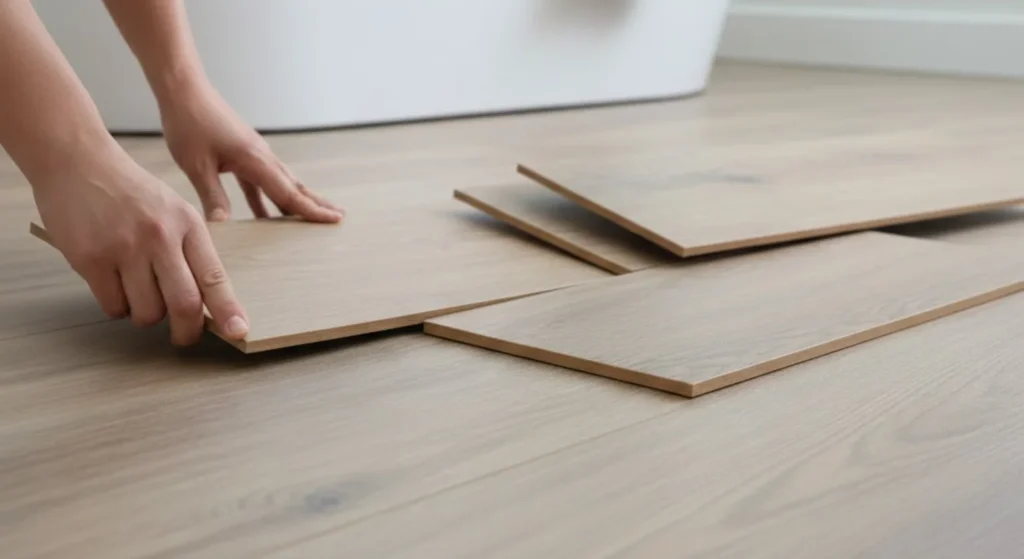
Let’s start with a heavy hitter. Vinyl flooring for bathroom spaces has completely changed. If you are thinking of that thin, peeling plastic from your grandmother’s house, erase that image. Modern luxury vinyl plank (LVP) is a beast. It is thick, durable, and looks incredibly realistic. I recently saw a bathroom where I swore the floor was oak. I touched it. It was vinyl.
Why is it so popular for 2026? It solves the biggest problem we face water. This is a waterproof core vinyl plank. That means if the kids splash water everywhere during bath time, your floor is safe. It won’t warp. It won’t swell. It just sits there, looking pretty and doing its job.
Another win is the temperature. Tile sucks the heat right out of your toes. Vinyl stays relatively warm. It is softer to walk on, too. If you drop a glass jar, it might actually survive fall. For a budget bathroom remodel ideas list, LVP is always at the top. It gives you that high-end wood looks without the stress of real timber maintenance.
2. Porcelain Tile

You cannot talk about bathroom flooring ideas without mentioning porcelain. It is the bathroom floor. Porcelain tile bathroom floor options are denser and harder than regular ceramic. That makes them almost waterproof naturally. They absorb very little moisture.
In 2026, we are seeing a shift in how porcelain looks. The shiny, glossy look is taking a backseat. Now, it is all about Matte finish bathroom tiles. These textures look more organic and natural. They also hide water spots better than glossy tiles. No one likes scrubbing water marks every single day.
Large format tiles are also huge right now. Instead of tiny squares, people are using massive slabs. This means fewer grout lines to clean. Less scrubbing of mildew from grout is always a win in my book. If you want a floor that will last for decades, porcelain is your best bet.
3. Natural Slate

Do you want your bathroom to feel like a spa in a mountain lodge? Slate is the answer. This natural stone bathroom flooring has a distinct, cleft texture. No two tiles are exactly the same. That variation adds so much character to a room. It is dark, moody, and incredibly sophisticated.
Slate is naturally slip-resistant because of its texture. That is a big safety plus in a wet room. However, you have to seal it. Stone is porous. If you spill hair dye or makeup on an unsealed slate, it might stay there forever. But with proper sealing, it is practically bombproof.
For 2026, we are seeing slate used in larger rectangular shapes. It pairs beautifully with light wood vanities. The contrast is stunning. Just remember, slate can be cold. It is the perfect candidate for heated bathroom floors. Imagine stepping out of the shower onto a warm stone. That is a true luxury.
4. Microcement

Concrete floors have been cool for a while. But pouring a thick slab of concrete in an upstairs bathroom? That is hard. Enter microcement. This is a thin layer of concrete coating applied by hand. It gives you that same industrial, sleek look without the immense weight.
The best part is that it is seamless. There are no grout lines. None. It is just one continuous surface. This makes cleaning incredibly easy. There are no cracks for dirt to hide in. It is also a fantastic waterproof bathroom flooring option when sealed correctly.
Designers love this for modern bathroom flooring 2026. It feels soft and smooth underfoot, unlike rough concrete. You can also tint it up. You aren’t stuck with just grey. Warm beige and terracotta microcement floors are becoming very trendy. It brings a Mediterranean vibe right into your home.
5. Marble
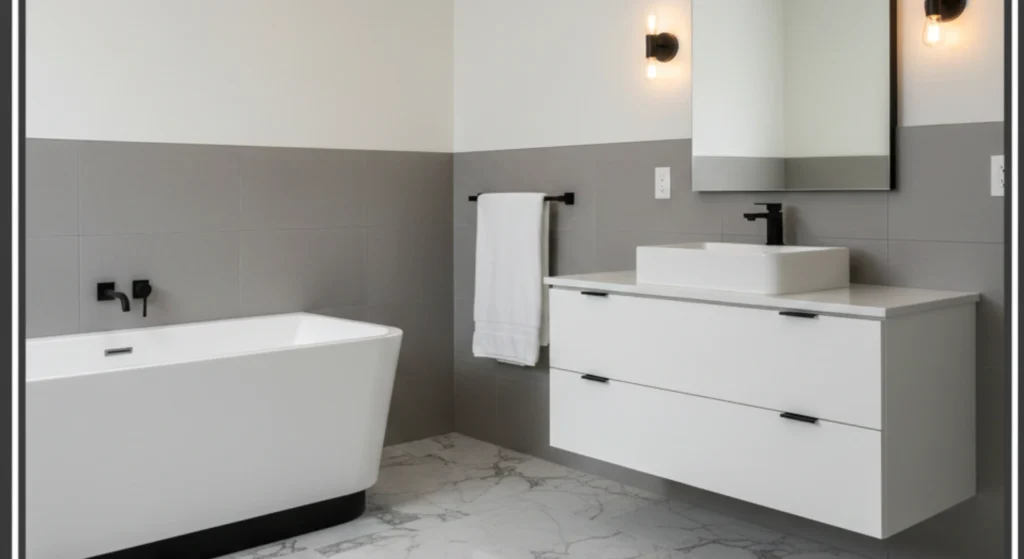
Marble is the queen of bathroom materials. It screams for luxury. A marble bathroom tiles floor instantly elevates the value of your home. The veining is like nature’s artwork. Carrara and Calacatta marbles are the classics that never fade from style.
But let’s be real about marble. It is high maintenance. It is soft and can be scratched. Acidic things like lemon juice or certain cleaners can etch it. You have to baby it a little. For many people, beauty is worth the effort. There is just nothing that catches the light quite like a real stone.
If you love the look but hate the maintenance, look for honed finishes. Honed marble has a matte look. It hides scratches much better than polished marble. It also offers better slip resistance. In 2026, we are seeing lots of warm-toned marbles with gold and brown veining, moving away from the stark grey veins.
6. Modern Linoleum
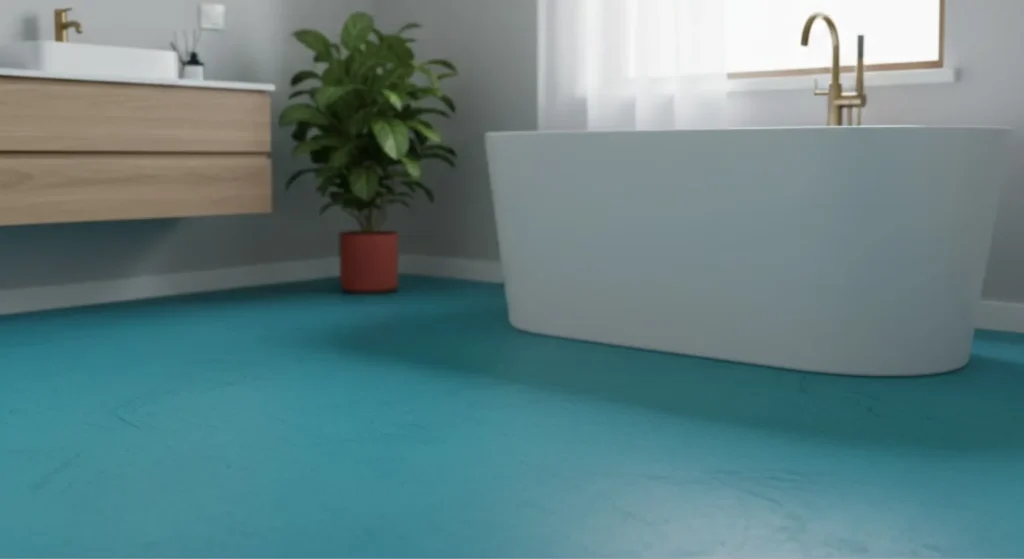
Wait, don’t scroll past! Linoleum is not vinyl. They are totally different. Linoleum is made from linseed oil, cork dust, and wood flooring. It is one of the most eco-friendly bathroom flooring options you can find. It is biodegradable and natural.
It has made a massive comeback. Manufacturers are making stunning designs now. You can get linoleum that looks like marble or poured concrete. It comes in vibrant solid colors too. It is fantastic to add a pop of fun to the bathroom.
It is naturally antimicrobial. It resists mold and bacteria’ growth. That is a superpower in a damp bathroom environment. It is also warm to the touch. If you want a green home, this is a top contender among bathroom flooring ideas. It is durable and can last 40 years if you treat it right.
7. Waterproof Cork
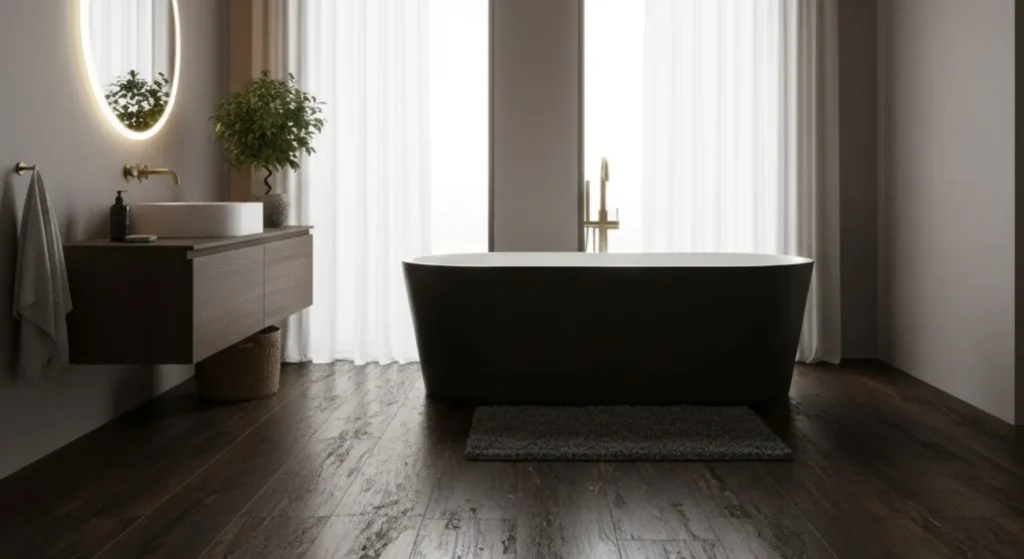
Cork is another material that people forget about. It is harvested from the bark of cork oak trees. The tree isn’t cut down, so it is super sustainable. But is it good for bathrooms? Yes, if you buy the right kind.
New technology has given us waterproof cork flooring. It usually comes with a specialized core or finish that locks out moisture. Cork is filled with tiny air pockets. This makes it the most comfortable floor to stand on. It cushions your feet.
It is also a natural insulator. It keeps the room warm and absorbs sound. No more echoing sounds in the bathroom. The look is unique and organic. In 2026, darker shades of cork are trending. They look rich and ground the space. Just make sure you reseal it every few years to keep that moisture protection strong.
8. Zellige Tile
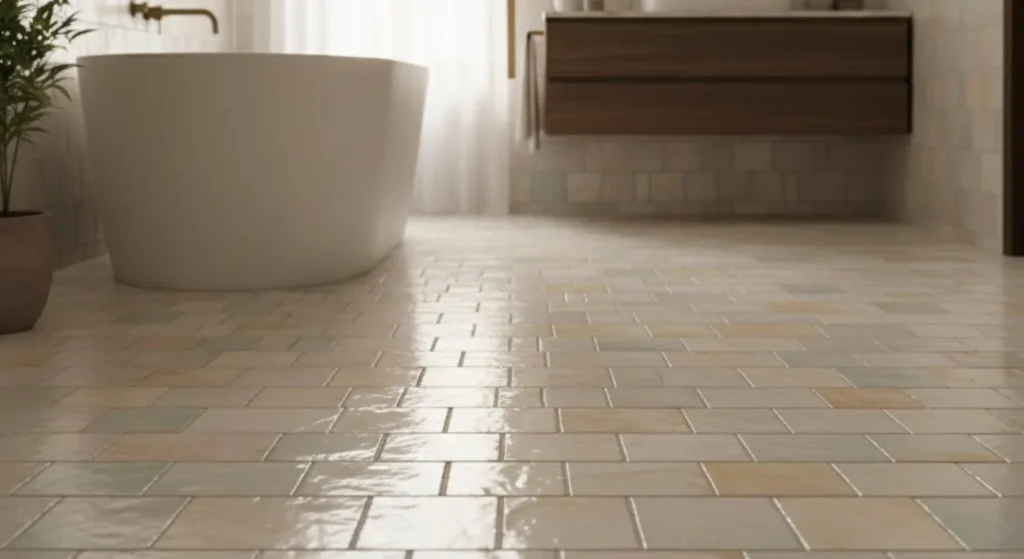
If you have been on social media lately, you have seen Zellige. These are Moroccan clay tiles. They are handmade, so each tile is slightly different. They have an uneven surface and chipped edges. That is the point. It reflects light in a shimmering, watery way.
Using zellige tile on the floor is a bold move. It adds incredible texture. However, it can be tricky to clean because it isn’t flat. It is best for powder rooms or master baths where you don’t have messy kids.
The aesthetic is unmatched. It feels ancient and modern at the same time. It fits perfectly with the “wabi-sabi” trend of embracing imperfection. Colors like sea green and pearly white are huge for luxury bathroom floor designs this year.
9. Ceramic Tile

Ceramic tile is the cousin of porcelain. It is generally softer and more porous, but it is also more affordable for bathroom flooring. It is easier to cut and install, which makes it a favorite for DIYers.
The variety is insane. You can find ceramic tiles in every color, shape, and pattern imaginable. For 2026, geometric patterns are big. Hexagons and octagons are replacing standard squares. They add visual interest to the floor without overwhelming the room.
Ceramic vs porcelain tiles are common debates. Choose ceramics if you are on a budget and the bathroom doesn’t get heavy foot traffic. It is still water-resistant enough for most family bathrooms. Just check the glaze quality. A good glaze protects the clay body from absorbing water.
For a bathroom renovation that blends style with durability, trust the local craftsmanship of DayBrook Homes to bring your vision to life.
10. Engineered Hardwood
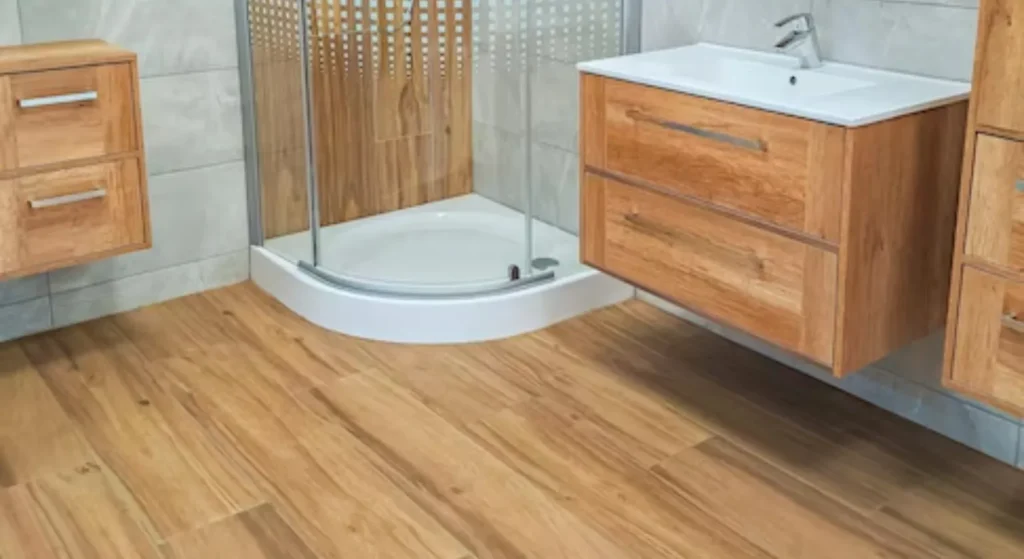
We used to say, “never put wood in the bathroom.” Engineered hardwood has changed that rule. Unlike solid wood, engineered wood has a plywood base. This construction handles humidity changes much better. It doesn’t expand and contracts as much.
It brings warmth that no tiles can match. It makes the bathroom feel like a living space. It flows beautifully from a master bedroom into an ensuite. You get that seamless look.
However, it is not waterproof. It is moisture-resistant flooring. You still need to wipe up splashes quickly. I wouldn’t put it in a kids’ bathroom where puddles sit for hours. But for adult space, it is stunning. White oak and walnut are the top wood species for 2026-bathroom renovation flooring trends.
“The best floor is one that handles your life, not just your decor.”
11. Limestone Tile
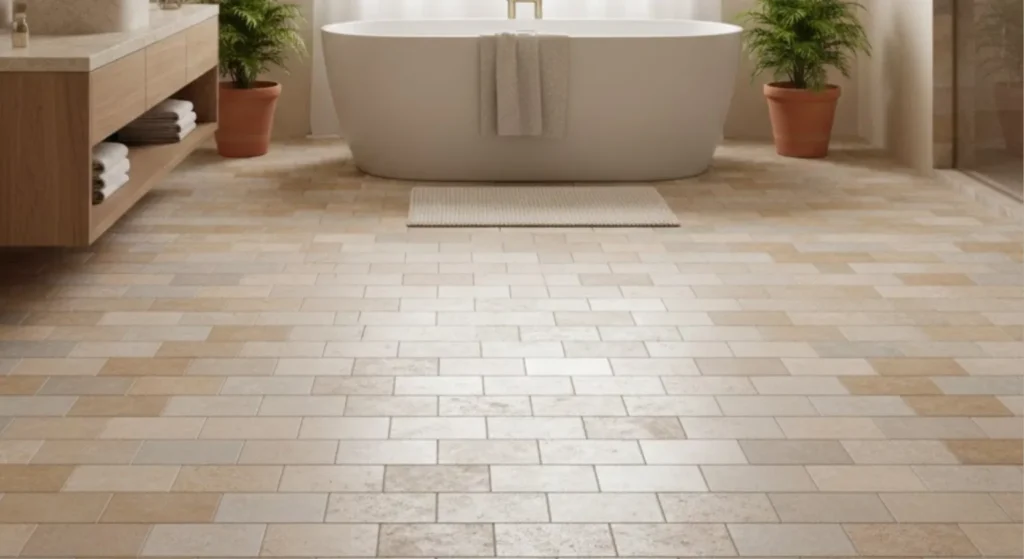
Limestone is a sedimentary rock. It has a beautiful, sandy texture. It usually comes in soft beiges, tans, and greys. It is perfect for a neutral, calm bathroom palette. It feels softer underfoot than granite or slate.
It is porous, so sealing is non-negotiable. But that natural stone bathroom flooring looks worth it. It creates a very relaxed, beachy vibe. In 2026, we are seeing limestone in large rectangular tiles laid in a brick pattern.
Be careful with acidic cleaners here, too. Limestone is calcium-based, so vinegar will eat it away. Stick to pH-neutral cleaners. If you care for it, limestone develops a lovely patina over time. It looks live-in and elegant.
12. Painted Wood

Do you have an old wood floor in your bathroom that looks terrible? Don’t rip it out yet. Painted wood floors are a charming trend. With the right floor paint, you can seal the wood and add color at the same time.
This is a great budget bathroom remodel idea. You can paint a checkerboard pattern. You can stencil a faux-tile design. You can go for a solid, bold color like navy or sage green. It gives a cottage or farmhouse feel.
Use marine-grade paint or high-quality porch and floor enamel. These are designed to stand up to foot traffic and water. It won’t last forever, but it is a cheap and cheerful fix that looks surprisingly high-end. It allows you to customize your space completely.
13. Tadelakt (Waterproof Stucco)
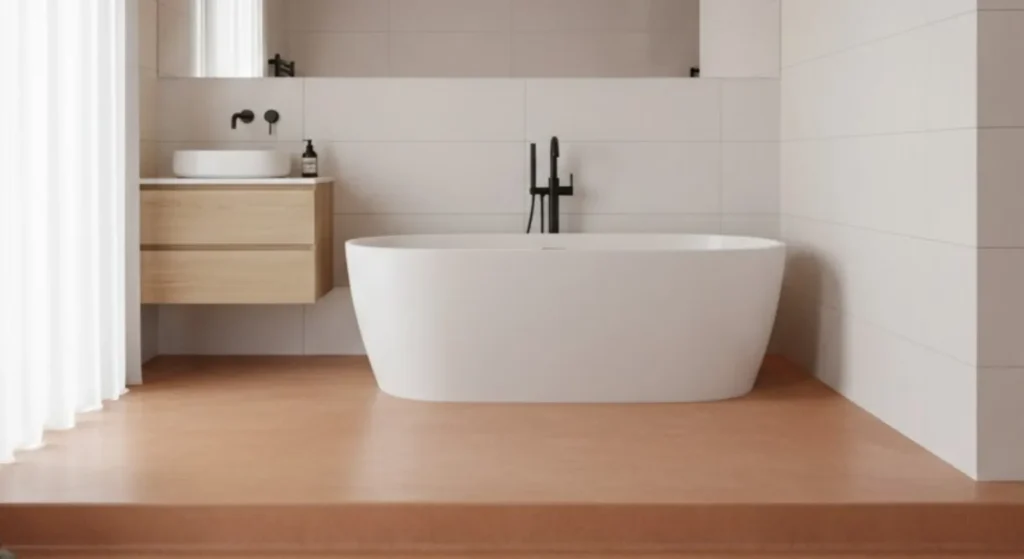
Tadelakt is a traditional Moroccan plaster technique. It is often used on walls, but it can be used on floors too. It is a waterproof stucco made from lime and polished with olive soap. The soap reacts with the lime to make it watertight.
This is for the person who wants something totally unique. It feels like a smooth stone but looks soft and organic. It is completely seamless. It curves up the wall without a break. It is perfect for wet rooms.
It requires a skilled artisan to install. It is not a DIY job. But the result is breathtaking. It is earthy, sensual, and very durable. It fits perfectly with the 2026 trend of organic, natural materials.
14. Penny Tiles

Penny tiles are those tiny round tiles that come on mesh sheets. They have been around for over a century. They are making a huge comeback in modern bathrooms. Why? Textures.
Because there are so many grout lines, penny tiles are naturally non-slip bathroom flooring. They grip your feet. This makes them amazing for shower floors. You won’t slip on these.
You can do so much with them. You can create borders, write words, or do flowers. In 2026, we are seeing penny tiles in bold colors like emerald green and navy blue. We are also seeing them used as “rugs” – a rectangular patch of penny tiles surrounded by larger field tiles.
15. Glass Mosaic
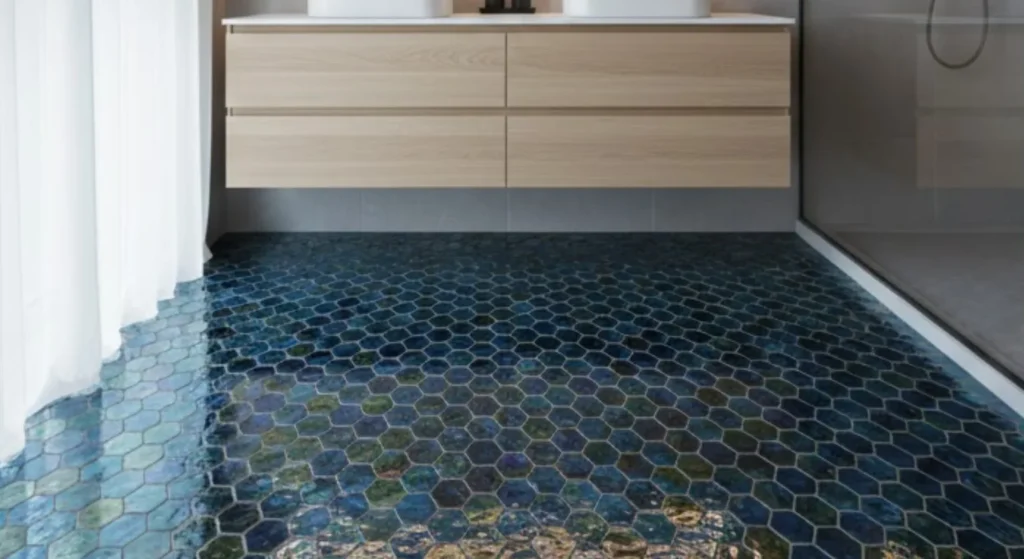
Glass mosaic tiles add sparkle. They reflect light and make a small bathroom look bigger. They come in every color of the rainbow. Recycled glass tiles are also a great sustainable flooring materials choice.
They are impervious to water. They will never stain. The only downside is that they can be slippery. Look for textured glass or small mosaic sizes where the grout provides grip.
They are perfect for adding a touch of glamour. You can use them as an accent to border or cover the whole floor for a jewel-box effect. Small bathroom flooring ideas often rely on glass to brighten up dark corners.
Final Words
So, there you have it. The world of bathroom flooring is vast. Whether you want the easy durability of vinyl or the luxury of marble, there is something for everyone in 2026. The biggest takeaway? Don’t be afraid of texture and warmth. Our bathrooms are our sanctuaries. They should feel cozy, not like a sterile hospital room.
Think about how you use space. Do you have kids splashing water? Go for LVP or porcelain. Do you want a spa retreat? Look at slate or engineered wood. Take your time. Get samples. Put them on the floor and look at them in different lights. Your perfect floor is out there waiting for you.
Frequently Asked Questions
What is the best non-slip flooring for a bathroom?
Small textured tiles are usually the best. Penny tiles, hexagons, or mosaics have lots of grout lines that create friction. Slate and matte finish porcelain are also excellent choices for grip.
Can I use laminate flooring in the bathroom?
It is risky. Traditional laminate swells when wet. However, some newer “waterproof” laminates claim to work. Generally, vinyl is a safer bet than laminate for damp areas.
Is underfloor heating worth it?
Absolutely. If you choose a tile or stone, they get cold. Heated bathroom floors are a luxury that makes winter mornings much easier. It also helps dry out the floor faster, reducing mold risk.
Which flooring is easiest to clean?
Large format porcelain tiles or luxury vinyl planks are the winners. They have few or no grout lines to scrub and resist staining beautifully.
How often should I seal natural stone floors?
Usually, once a year. A simple water test tells you when. If water beads up, it is fine. If it soaks in and darkens the stone, it is time to reseal.